Put simply, cosmetic tattooing is a regulated business in Australia and operators are expected to put needle to skin only after they have met their state or territory public health obligations, local council registration or notification, infection control and documentation requirements. The particular enforcement route and paperwork will be different from one state or territory and council to the next, but the substance of compliance is uniform: you need safe premises, to sterilise and disinfect as you should, keep your records in order, obtain consent and screen your clients properly.
I am Damian Rockwell and I can tell you this is where people make a mistake. There is an assumption among some operators that a good technique will see them through. It will not. In Australia, cosmetic tattooing is in the same bracket as body piercing, tattooing and other personal appearance services when it comes to skin penetration regulations. For nursing mothers, nursing mother cosmetic procedure guidelines should be reviewed. An operator requires a system of compliance, not merely a well appointed trolley and a lamp. As for the client, it would do them well to be familiar with what is lawful before allowing anyone to work on their brows, lips or scalp.
Why it is relevant today
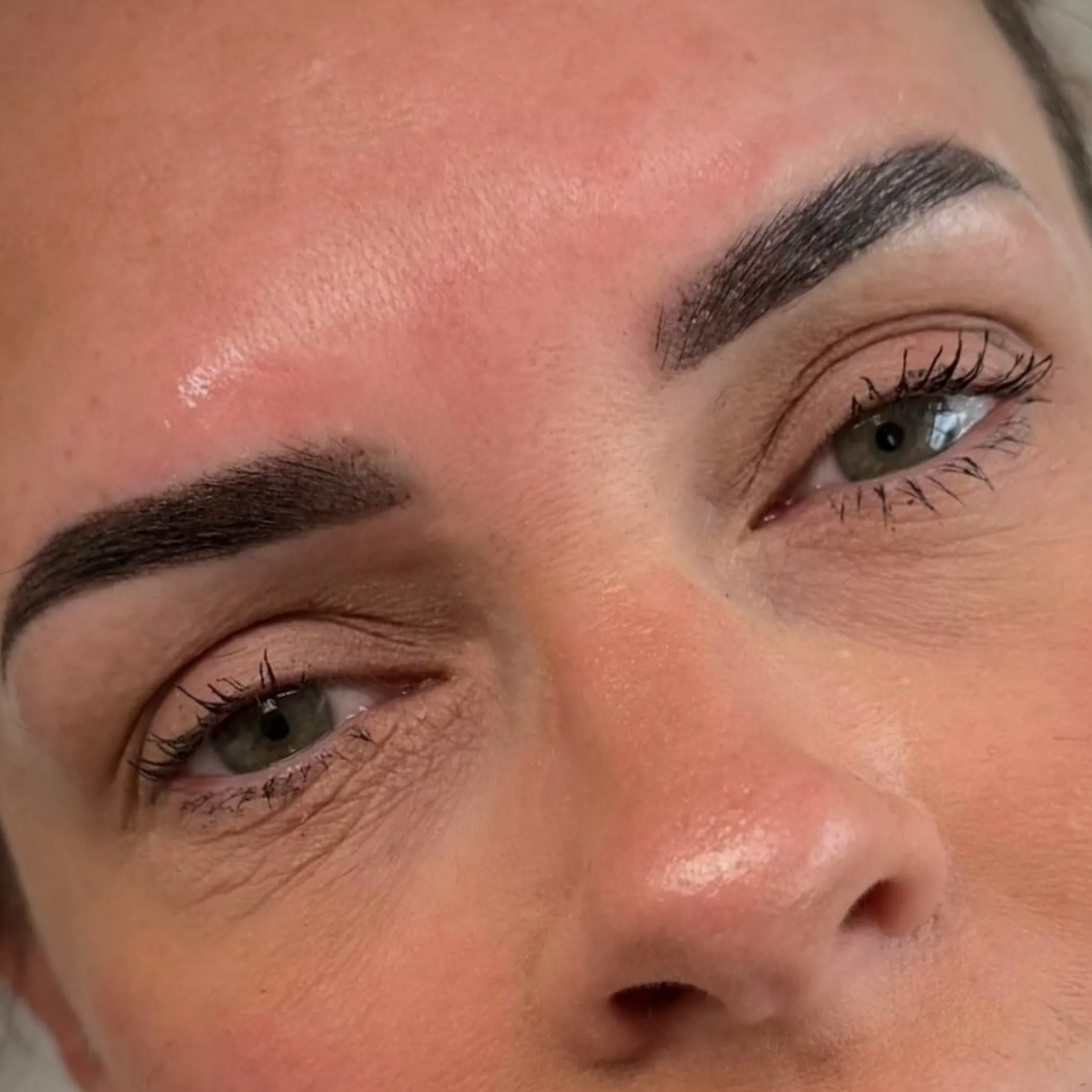
Principally the 2026 landscape has not changed much, but there is a keenness to enforcement and an informed clientele. Authorised officers from the health department or council are less interested in how glossy your branding is and more in how your systems stand up to an inspection on any given Tuesday.
In my experience with the likes of hospitality and tourism where compliance is paramount, it is seldom the obvious theatrics that cause problems. More often it is a log that has been overlooked, a consent form without clarity, something handheld that has not been put through its paces or a mobile operation that is fine for Instagram but does not pass muster.
How the rules break down
Do not expect to find a national licence for cosmetic tattooing in Australia; that is the first thing to put right. You will find the legal framework in the public health laws of the states and territories, in local government registration, and in workplace duties pertaining to safety, sharps and waste.
What you have to do is consider three things. The health department will have its broad expectations for public health, the local council will be on top of premises registration and monitoring, and you as the operator have to demonstrate infection prevention in your daily routine. For an official view of the skin penetration industry in Victoria, refer to the Department of Health.
Federal, state and local
There is no federal licence to cover you as an operator of cosmetic tattoos. State and territory legislation is what governs skin penetration procedures, with councils or their equivalent running the show on inspections, notifications and local conditions.
It is a common error to think approval from one council is transferable. Move your premises, open up a room, have a pop-up day or take a booking in another municipality and you may find the rules of the road have altered. A nice fit-out in Melbourne is no guarantee of acceptance with a regional shire three hours away.
You cannot overlook the state by state differences
One place will use the term skin penetration premises, another personal appearance services or business registration under a health scheme. You will find guidance from the Victoria Department of Health, SA, WA and Queensland Health, but in the end it is the local administration that dictates the process. So the question is not so much whether a permit is needed in Australia, but what registrations and fit-out rules are in play for your service model and council area. A home based room and a fixed clinic are not going to be viewed in the same light.
A matter of risk
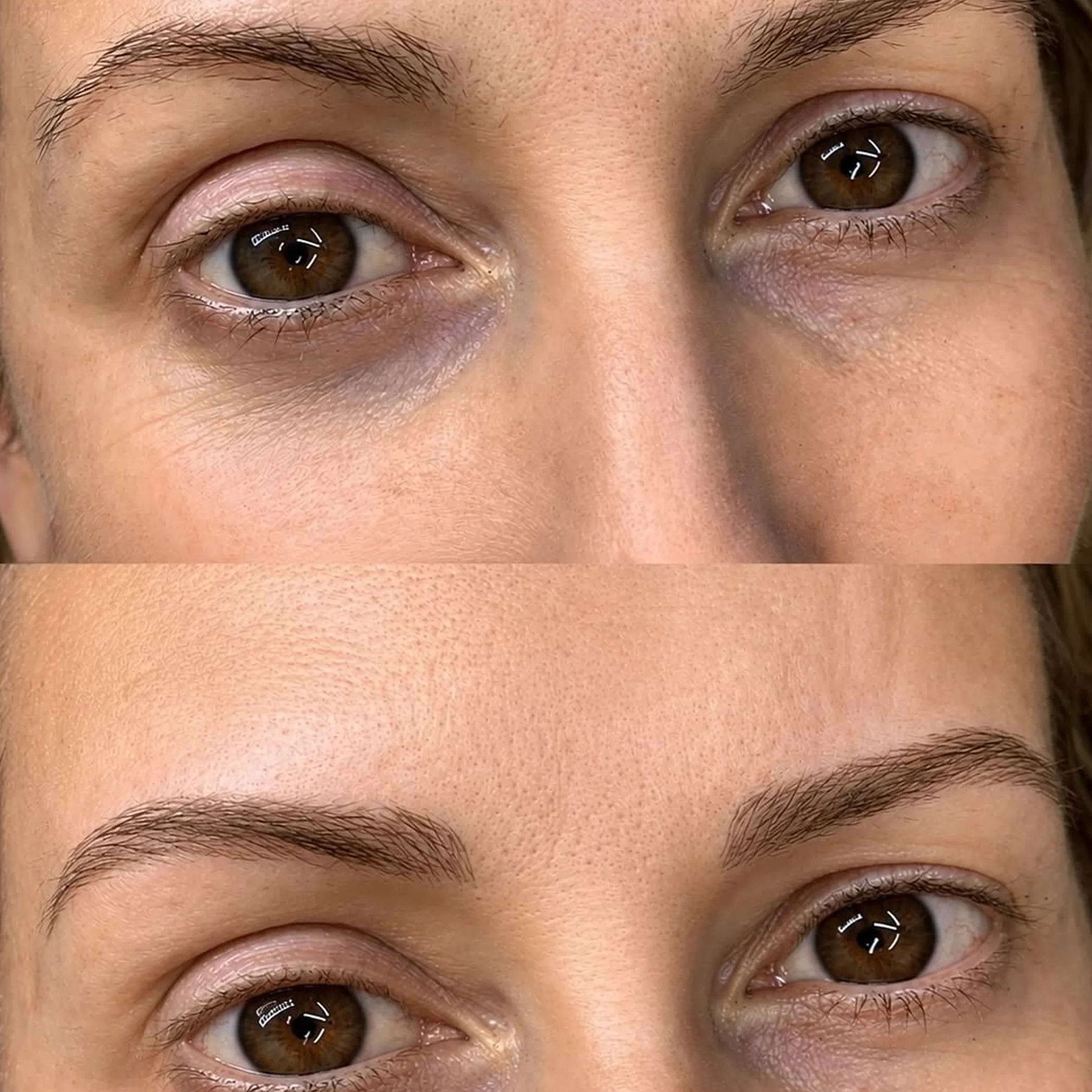
Then there is the procedure itself. Cosmetic tattooing is not a beauty treatment in the loosest sense. Break the skin and you have an infection risk and it is regulated as such. That is the case with microblading, lip blush, scalp micropigmentation and eyebrow tattooing.
Some of the rules for dermal needling are overlapping, whether the treatment is health or cosmetic related and depending on the jurisdiction. Do not count on a single policy if your menu of services is broad. The risk is plain enough: penetrate the skin and you open the possibility of exposure to blood and body fluids. Contamination control is of consequence for the whole gamut of what is handled in the course of a procedure: needles, grips, pigment caps, benches and gloves to name a few, as well as packaging, transport containers and waste bins.
One should put expectation and reality in their proper perspective. A 90 minute procedure can have hours of unseen compliance put into it for the setup, pack-down, cleaning, instrument tracing and dealing with waste. The client will not necessarily be aware of this but an inspector will be.
The Standard That Sits Under Everything
In matters of practical infection control, particularly with reusable instruments, AS/NZS 4815:2006 cosmetic tattooing requirements are the backbone for most operators. The standard covers reprocessing of medical and surgical equipment in office health care facilities and is much cited in skin penetration guidance on account of its safe reprocessing principles.
To put it in Damian Rockwell’s terms, any reusable item that is in the vicinity of the procedure field has to be cleaned, packaged, sterilised, stored and tracked by a system you can defend. “We give it a good wipe down” is no system at all, only wishful thinking aided by some nice lighting.
AS/NZS 4815:2006 put simply
When an operator has to reprocess equipment from one client to the next, the standard is what is called for. It is there to underpin documentation, load monitoring, the integrity of your packaging and the like, and to ensure proper cleaning prior to a validated sterilisation workflow. Its relevance does not wane even in a single-use environment if there is a component to be reprocessed.
The prudent thing for a cosmetic tattoo operator is to make use of single-use needles and the rest of the disposable items available, leaving the validated sterilisation systems to those reusable tools allowed by the manufacturer and local rules.
Permits, Premises And Mobile Setups
Businesses can be hard up for time and money over this. There is no assurance that a well appointed room will be registered as premises, and a mobile service with its apparent flexibility will prove rough going from a compliance point of view if water is not on hand or there is no clean/dirty divide or lawful way to put away waste.
For those in 2026 opening or expanding or making the move to mobile, get your approvals in order before putting pen to a lease or having price lists printed. An authorised officer may have you rebuilding a sink area; the paperwork is a cheaper option.
Fixed premises
You will generally need registration or approval from the local authority. They will look at your treatment room layout and access for inspection, how you store instruments, dispose of sharps and manage waste, and whether finishes and handwashing facilities are to spec.
Do not think of parking and access as peripheral. Put your sterilisers in a back room because the treatment room is more attractive and you will find your compliance wanting. I have put my finger on operations that would rather part with cash for signage than see to their workflow.
Mobile operators
There is no uniformity to mobile tattooing regulations across Australia which is something of a trapdoor in the industry. One council will be more exacting than another on invasive work in a home or at an event, and a mobile operation might have to put forward a registered base.
Make a day of it and put your mobile workflow under review. Where is the clean stock? What becomes of contaminated items straight after? Is hand hygiene being observed and surfaces properly done? Does the location sanction the service? If the answers are not clear, do not book a client until they are.
| Compliance Area | Fixed Premises / Mobile Setup | What Catches People Out | |
| Premises Registration | Local council or authority will often want it | A registered base may be called for | To suppose a hired room or home salon is approved |
| Handwashing Access | A permanent basin is the norm | Every location must be in order | An ad hoc arrangement will not pass |
| Waste Management | Clinical and sharps waste arrangements | A disposal chain to be had | Contaminated waste in transit |
| Cleaning Workflow | Clean and dirty are kept apart | Temporary spaces run a higher risk | Soft furnishings and shared benches |
| Inspection Readiness | Predictable | Difficult when you have several sites | Lack of records on site |
Hygiene That Stands Up
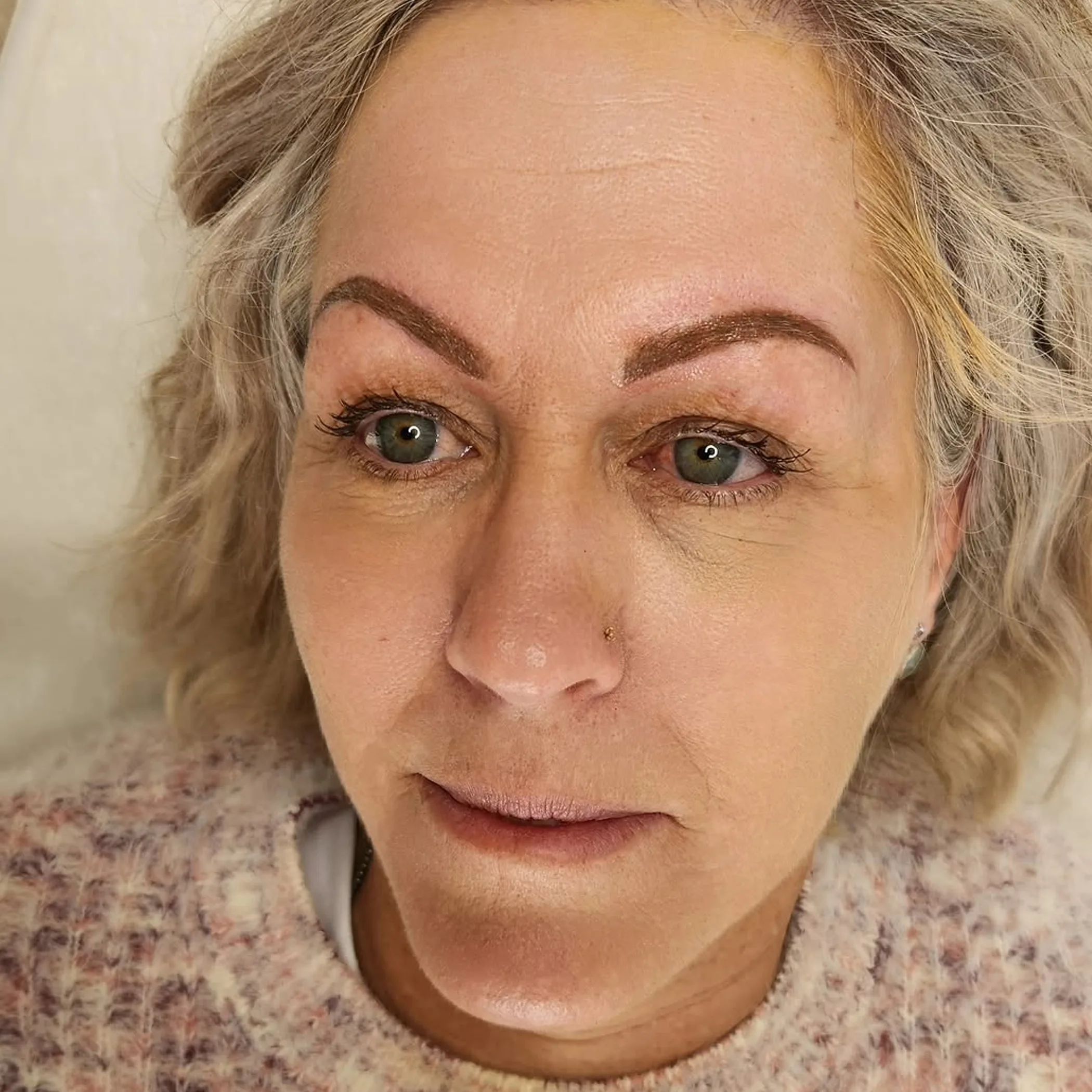
The guidelines in cosmetic tattooing are not for show. Infection prevention and control is about stopping transmission each and every time, be it through barriers, hand hygiene, environmental cleaning or a spotless chain of custody from the start of a job to the bin.
It is only to be expected that the client’s eye will be on the needle. The trouble tends to come from what is happening in the vicinity of it: a gloved hand on a phone, pigment bottles with a contaminated neck, a reusable tray that has not been put through its paces or any cross-over from the admin desk to the clean field.
Sterilisation and disinfection
One should not confuse sterilisation with disinfection. The latter serves to bring microorganisms on equipment or surfaces down to an acceptable level; sterilisation, for those items where it is called for, is meant to put an end to all microbial life. It is incumbent on operators to be clear on which process is appropriate for what item and to adhere to the rules of the locality as well as the manufacturer.
A single-use needle is to be opened before the client, employed once and then put straight into a sharps container of the approved type. With reusables, assuming they are sanctioned by the manufacturer and the law, there must be some form of validated reprocessing. At that point record keeping and autoclave performance are no longer optional.
Autoclaves, Logs and Spore Testing
Running a benchtop steriliser is not just a matter of having a machine you can turn on. There has to be evidence that the cycles are doing their job, along with maintenance and monitoring that is properly documented. Physical cycle records, chemical indicators and the odd biological test are what one will see.
Then there is the matter of the NATA autoclave spore test. Biological testing is generally something to be left to the proper laboratory channels. NATA is the body that accredits such services so it is best to engage a provider of good repute and have the results to show. OneBookPlus or ProComply are fine for putting order to your compliance records but software is of little value if the practice behind it is not.
Records That Protect Everyone
Many an operator is exposed by his documentation. The work may be done with care but the records are flimsy. This is an issue when it comes to an inspection, a complaint or the safety of the client.
Consent forms for cosmetic tattooing are more than a box to be ticked. They are there to evidence informed consent, lay out the procedure and risks and give aftercare advice. Should a regulator put questions to you or something go awry, you will want the medical history, contraindications, batch and pigment details at hand.
What to put in the file
You will want to have on record the signed consent, photographs (with permission), aftercare instructions, the name of the practitioner and the instrument and pigment batches used. Make note of the date, treatment area and client identity, any disclosures of allergy or sensitivity and whether a patch test was done. If pregnancy or lactation is a factor, this should be noted. In short:
- Client and contact information
- Screening for medical history and contraindications
- Details of the procedure and who performed it
- Traceability for pigment, equipment and batch
- Relevant sterilisation records
- Aftercare acknowledgement
Retention periods
These vary from one part of the country to another so the state, territory and local requirements must be checked. Where the client is under age it may be necessary to hold on to things longer. The rule of thumb is to have them in a secure and legible place for as long as public health or legal obligations in your jurisdiction demand.
Too often people are caught with their storage in disarray: a booking app has half the file, the phone has the photos, a drawer the consent forms and the kettle is next to the notebook with the sterilisation logs. Such an arrangement does not stand up to scrutiny. Records should be central and easy to get at.
Age Limits And Higher-Risk Clients
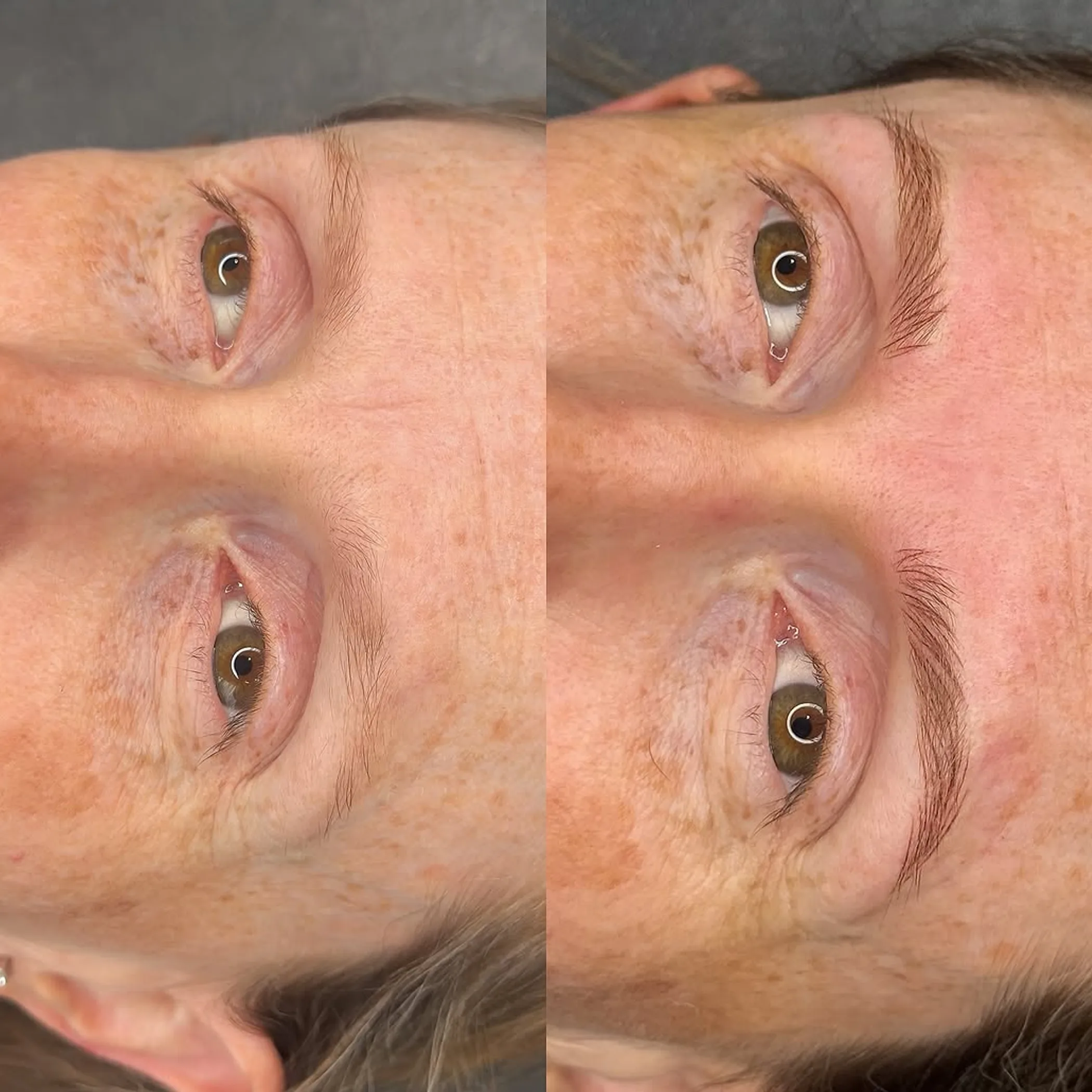
With age restrictions for tattoos across Australia there is a tendency to make assumptions. But jurisdictions have their own way of doing things and cosmetic tattooing may be subject to the same controls as other skin penetration procedures. Some will not allow a minor to be tattooed, parental consent or not, while others make allowances based on the procedure or the part of the body.
Be blunt about it: check the law in your area before you put a minor in the book and document the verification. A policy that is more exacting than the letter of the law is usually wise.
Nursing mothers and the like
Is cosmetic tattooing off limits for a nursing mother? Not by any universal ban in Australia, but it is a question of risk management and consent. A conservative line of screening is advisable and operators would do well to heed clinical and insurer guidance.
In your consultation materials you might set out the guidelines for nursing mothers in plain terms. Cosmetic tattooing is an elective procedure, and if standards are not met the skin penetration is an open door to infection. Those with immune problems, mastitis or who have recently given birth should be made aware they may need to seek medical opinion first.
Inspections And Penalties
An authorised officer is seldom looking for a single dramatic infraction. Coherence of the system as a whole is what it comes down to. An inspector will want to see how you handle everything from fit-out and cleaning to the disposal of sharps, not to mention staff knowledge, steriliser logs, product storage and your waste contracts or records.
There are penalties for non-compliance and they are at the discretion of the jurisdiction; an operator can be handed an improvement notice or infringement penalty, have operations put on hold, face prosecution or in some serious instances be shut down. The figures are subject to change so one would do well to check with the relevant state or territory for the latest. Then again, the fine is not always the costly element. More often it is the hit to your reputation, insurance problems and trade that has been lost.
Some non-compliance issues are all too common
You will know the usual suspects: sterile stock past its date, no evidence the steriliser has been validated, handwashing facilities that are hard to get to, a lack of separation between clean and dirty, client screening left half done, premises registration in question or mobile services that seem to think the rules end at the car boot. Or there is the matter of procuring imported equipment and not bothering to see if the reprocessing instructions are adequate for lawful use.
For a sense of how environmental health practitioners view these settings in the field, the resources put out by Environmental Health Australia (EHA) are of assistance. Inspectors care about risk in the real world, not what is written in policy.
A Checklist of Some Use
For those in the cosmetic tattoo business this is the practical side of things. You want a compliance system you can put through its paces even when you are behind schedule, tired and dealing with text messages over parking out front.
We have put together the following for operators, in particular those doing brows, lips, scalp work and the like. New to the game? Start here before putting any money into décor. An established concern can make of it an honest audit.
- Make sure you are up to speed on the precise requirements of your council and state or territory as far as skin penetration premises registration, approval or notification goes.
- See if your mix of services brings with it separate regulation for dermal needling, microblading or cosmetic tattooing.
- Your treatment areas should be conducive to good cleaning and waste management and allow an authorised officer to inspect.
- Where called for, single-use needles are to be used and you must have the right arrangements in place for disposing of sharps.
- Any reusable items have to be put through AS/NZS 4815:2006 validation, with the necessary biological monitoring, maintenance and logs to show for it.
- Have your provider do the laboratory processing for biological tests and keep the NATA-related records from autoclave spore tests.
- Go over infection control with your staff, from glove changes to how products are handled and the environment is cleaned.
- Consent forms, aftercare sheets, medical history and traceability records should all be standardised.
- Before you put a younger client in the book, verify identity and age restrictions.
- Give higher-risk consultations a once-over, be it for pregnancy, lactation, anticoagulants, an active skin condition or a recent procedure of some kind.
- If you are a mobile operation trading from pop-ups, expos, hired studios or people’s homes, you should audit those workflows on their own.
- And put your records in one system where they can be found, not in a hodgepodge of apps, paper and phones.
Who we have in mind with this guide
Clinic managers, home-based and mobile practitioners, cosmetic tattoo operators and clients wanting to ascertain if a setup is above board will find this useful. Particularly if you are putting in place a new premises, onboarding staff or have a patchy compliance system you wish to put in order.
But if your business is in the realm of medical treatments or procedures with therapeutic or clinical frameworks, this will not suffice. For that you require formal legal and clinical counsel, do not try to wing it. This is not like putting together flat-pack shelves.
Damian Rockwell has the last word
In short, the 2026 regulations for cosmetic tattooing in Australia are to be taken seriously, they are enforceable and very much of the practical variety. A robust set of hygiene systems and records to stand up to inspection are a given, as is the need for a skin penetration permit from your authority or council.
My view is the ones who fare best over time are not the most ostentatious. They are the operators who have the back-end in order: the lawful mobile practice, the client screening, the sterilisation and infection control, the premises registration. Put those bones in place and everything else falls into line.
Frequently Asked Questions
The 2026 Australia skin penetration guidelines give rise to these queries from operators and clients alike.
Is a Skin Penetration Permit in Australia Mandatory for Cosmetic Tattooists?
As a rule yes, though it is up to the local authority and the state or territory. Most will require some form of permission from the council, be it registration, premises approval or notification, prior to trading. Those running a home or mobile business tend to come under more of a microscope so it is worth checking your council area.
What Are the Infection Control Standards for Cosmetic Tattooing?
It is incumbent on operators to observe the tenets of infection prevention and control. This encompasses hand hygiene, the safe cleaning of one’s environment, sterilisation and disinfection, the use of single-use needles as the situation demands, and correct disposal of sharps and waste. In the case of reprocessing reusable equipment or instruments, AS/NZS 4815:2006 will often be the standard to adhere to.
Age Limits For Cosmetic Tattooing In Australia?
There are limits but they are not uniform across jurisdictions. The rules that apply to cosmetic tattooing can be part of laws that put tight restrictions on minors in relation to skin penetration and tattooing. An operator would do well to check local law and have identification on hand to document an age check before moving ahead.
Record Keeping And Retention At Cosmetic Tattooing Studios
What is called for is usually a file with the client’s consent, medical history, procedure and aftercare notes, and traceability of the kind found in pigment batch numbers and practitioner details. As for how long these are to be kept, that is a matter for the jurisdiction in which you work; make sure the legal requirement is met and that records are in order, legible and secure.
Guidelines On Nursing Mothers
You will not find an Australia-wide rule to cover every eventuality when it comes to cosmetic tattooing of nursing mothers. A discussion should be had by the operator over the elective status of what is being done, any infection risk, healing, topical products and pertinent medical matters. Where a clinic has guidelines for such procedures, the language ought to be one that prompts the client to make an informed choice and seek medical counsel as needed, instead of putting forward blanket statements without basis.
